
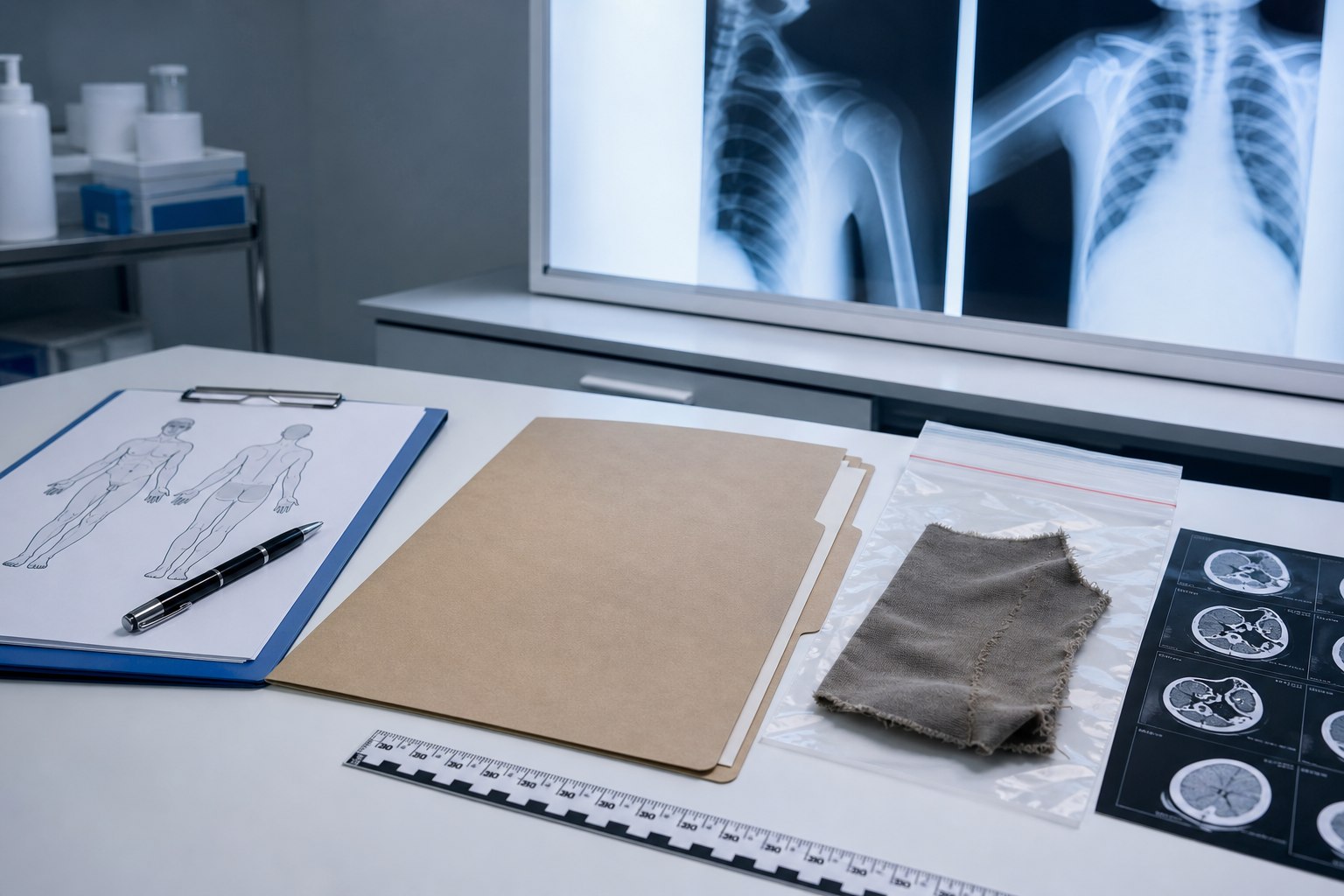
Judicial report, self-defense, unfair provocation, mediation and legal evaluation of the criminal case in the crime of intentional injury.
The crime of intentional injury can occur by causing pain to a person's body, or by impairing their health or perception ability. A lawyer specializing in intentional injury examines whether the act was committed intentionally or negligently, legitimate defense, the tool used, the medical nature of the injury, and the mutual behaviors of the parties. The statement in the health report is an important but not the only element of criminal law evaluation.
In fights in Antalya and Manavgat, domestic incidents, workplace and traffic disputesAttorney Ahmet Emre Çimen, combines the camera, witnesses, forensic report, and crime scene findings on a timeline. Recording all complaints during the initial examination and preserving the evidence is important for both the victim and the suspect.
Simple Medical Intervention Criterion
In a forensic report, whether the injury can be treated with simple medical intervention may affect the determination of the basic or more severe form of the crime. This expression is not the same as the concept of “minor” in everyday language. It should be checked whether the report includes examination findings and its consistency with imaging results and subsequent diagnoses.
Aggravated Injury Due to Its Consequence
Bone fracture, weakening or loss of organ function, permanent facial mark, life-threatening condition, or consequences on pregnancy are separately regulated by law. The causal relationship between the result and the act and the perpetrator's responsibility at least at the level of negligence are investigated. Every medical finding does not automatically constitute the same aggravating factor.
File elementPurpose of examination
Forensic reportNature of the wound and permanent outcome
CameraInitial attack, continuation, and defense boundary
WitnessActions and words of the parties
Crime sceneDistance, vehicle, and physical capability
Legitimate Defense Review
Against an actual or inevitable unjust attack, defense must be carried out at that moment and proportionate to the attack. Actions continuing after the attack ends to punish may not fall within the scope of defense. The possibility of escape alone does not eliminate the defense; necessity and proportionality are evaluated with concrete circumstances.
Exceeding the Limit in Legitimate Defense
Crossing the border due to fear, excitement, or panic may be subject to special provisions. The physical condition of the parties, the sudden development of the attack, the tools, and the duration of the incident are important. The perceptual conditions at the time of the incident should be taken into account instead of evaluations made later in a calm environment.
Unlawful Provocation
Committing a crime under the influence of anger or intense grief caused by an unlawful act may be a reason for mitigation. The act that caused the provocation, the time connection, and the psychological effect with which the reaction occurred should be demonstrated. Rumors or past disagreements do not count as provocation. Self-defense and unlawful provocation are different institutions.
Concept of Weapon
Many objects suitable for attack and defense alongside firearms can be considered weapons under criminal law. The way the object is used, the danger it creates, and its connection to the incident are examined. It should not be assumed that the items found at the scene belong to or were used by the perpetrator; criminal and witness evidence should be sought.
Mutual Fight and Determination of the Perpetrator
In a fight involving a crowd, it must be determined which injury was caused by whom. Being at the scene alone is not sufficient for participation. The roles of a joint perpetrator, a helper, or a person trying to separate are distinguished through concrete actions. Blind spots in camera footage and the witnesses' relationships with the parties are taken into account.
Complaint and Reconciliation
Some forms of minor injury may be subject to complaint and reconciliation; qualified cases change depending on the victim’s status and domestic violence. It should be noted that withdrawing a complaint does not end the case in every file. Protective measures and restraining orders serve purposes separate from the criminal case.
Contradiction Between Reports
If there is a difference between the initial emergency service record and the final forensic report, the tests used and the examination dates are compared. The connection of a late-emerging complication to the incident should be explained. An additional report may be requested from Forensic Medicine or an expert board; objections should be made to the reasoning, not just the conclusion sentence.
Domestic Violence Files
Qualified circumstances and protective measures may arise in actions directed at a spouse, ex-spouse, or family member. Waiving the complaint does not terminate the public prosecution in any case. While the victim's safety is ensured through measures such as restraining orders and communication bans, the defendant's rights to defense and access to evidence must also be observed.
Camera and Phone Location Data
The footage may show who initiated the fight and the duration of the action. However, a recording without sound or with blind spots may not explain the entire context on its own. Phone location can indicate an approximate area; it does not directly prove that the person made a specific movement. Technical data should be interpreted together with witnesses and the crime scene.
The Victim's Rights to Compensation and To Join the Case
The victim can present evidence in the investigation and prosecution, participate in the case, and exercise their legal remedies. A civil lawsuit can also be filed for treatment expenses, loss of earnings, and moral damages. Fault and material facts in the criminal file may affect the compensation trial.
Personal Situation of the Defendant and Determination of the Penalty
When determining the base penalty, the court must justify legal criteria such as the manner of committing the crime, the means, the damage, the intensity of intent, and the purpose. Criminal record, remorse, and trial behavior are considered in subsequent individualization stages. Increasing or reducing the penalty with boilerplate expressions may become a matter of legal remedy.
Incidents Between Children
In incidents at school or sports environments, age, development, peer conflict, and educational measures are taken into account. A child's criminal responsibility is evaluated according to their age group and perception ability. The dissemination of camera and social media records should not cause additional harm to children's privacy.
Follow-up of Injury Case in Antalya
If the victim's health condition changes during the trial, an additional report may be needed. Early evaluation for permanent scars or loss of function can be misleading; a medically appropriate waiting period is observed. The defendant and victim can review the report questions, request missing medical records to be provided, and request that inconsistencies be resolved by the expert committee.
If there is an allegation of alcohol or substance influence in the incident, the measurement time, device calibration, and health record are examined. Intoxication does not remove intent in any case; the result may vary depending on whether it occurred voluntarily or involuntarily. Allegations regarding perception and behavior abilities should be evaluated with an observation report and, if necessary, an expert report.
Preservation of Evidence at the First Application
The victim should apply to a health institution without delay and report all complaints and how the incident occurred accurately. Dated photos of injuries, torn clothing, the incident scene, and security camera records can be preserved. A copy of the report and subsequent check-up documents should be obtained. The suspect should also record any defensive injuries they have and report witnesses and footage supporting lawful defense without delay.
The parties' meeting after the incident for the purpose of reconciliation should not turn into a new threat or pressure. Any payment or apology document made outside of the mediator should be carefully written in scope. Compensation for the victim's damage may have consequences in the criminal process; however, due to aggravated circumstances or ex officio proceedings, it does not always terminate the case.
Multiple Perpetrators and Injury
If it cannot be determined who struck which blow in a mass incident, common control, joint action, and causality are examined. Each defendant's contribution to the assault, not just their presence at the scene, must be demonstrated. If the victim's wounds originating from different people can be medically distinguished, the report should explain this. If doubt cannot be resolved, criminal liability cannot be established by assumption.
Reconstruction of the Incident Second by Second
Every move must be lined up from the beginning of the fight to the separation of the parties. The first physical contact, whether the attack continued, when the vehicle used appeared and the possibility of the parties to move away are compared with the images and statements. The message or apology after the incident can be used in the assessment of intent or remorse depending on its context; It should not be considered a confession of crime on its own.
If there is more than one injury, the possible mechanism of each finding is investigated. A fall, a defensive gesture or the intervention of a third party can explain some of the scars. The physician should be asked for an opinion on the way the wound occurred and its medical result, not a criminal legal characterization. If the crime scene objects and the findings in the report are not compatible, an additional expert examination is required.
In distinguishing between attempted intentional killing and intentional injury, factors such as the number of blows as much as the weapon used, the target area, words, hostility, whether the attack was voluntarily stopped, and any obstructive reasons are evaluated. The mildness of the result alone does not determine intent. The court must discuss all indicators together and apply the principle that the defendant benefits from doubt.
In an intentional injury case, the medical report should be read together with evidence showing how the act occurred.Av. Ahmet Emre ÇimenComplaint, defense, reconciliation, prosecution, and legal remedies in Antalya and Manavgat reveal all aspects of the incident.
Frequently Asked Questions
Where can a report of being assaulted be obtained?
Observations should be recorded by applying to a health institution; a forensic report should be issued if necessary.
Does the case drop if the complaint is withdrawn?
Whether the crime is dependent on a complaint and its qualified nature are determining factors.
Is mutual fighting self-defense?
Each party's actions are examined separately; mutual fighting does not automatically constitute self-defense.
Does a bone fracture affect the penalty?
The effect of the fracture on vital functions and causality is assessed with a medical report.
Can't a case be filed if there are no witnesses?
An investigation can be conducted with health records, cameras, messages, and other material evidence.
Are a stick or bottle considered a weapon?
The way it is used and its suitability in an attack are examined within the legal definition.
Can moral compensation be requested separately?
Private law claims may arise if conditions exist due to violations of personality and bodily integrity.