
Legal evaluation regarding the distinction between use and trafficking in drug crimes, search, digital evidence, arrest and defense process.
Investigations of drug offenses are based not only on the nature of the substance seized but also on the legality of searches, seizures, monitoring of communications, and the chain of evidence. In a defense conducted within the scope of a drug crimes lawyer in Antalya, the distinction between possession for personal use and the crime of trafficking should be made from the entirety of the case file. Quantity alone is not a definitive measure; packaging, communication, financial transactions, and the personal circumstances of the defendant are evaluated together.
In investigations conducted in Antalya and ManavgatLawyer Ahmet Emre Çimensupervises the entire chain of procedures from the moment of arrest to the laboratory report and digital examination. Since the initial statement can influence the direction of the subsequent defense, the individual should act understanding their rights to remain silent and to benefit from legal counsel.
Evidence Establishing the Distinction Between Use and Trafficking
The Turkish Penal Code regulates the acts of purchasing, accepting, possessing, or using narcotic or stimulant substances separately from the acts of manufacturing and trading. In classification, the type and amount of the substance, the place it is found, the number of packages, the precision scale, communication related to sales, witness statements, and money transfers are examined together. No indication should, taken out of context, lead to a conclusion on its own.
Field of ExaminationMain Question Asked
Substance and PackagingIs it for personal use, or does it indicate preparation for distribution?
Digital RecordWho are the real parties of the message and what is the context?
Money MovementCan a concrete link to a crime be established for the transfer?
Place of SeizureWho had physical control over the substance?
Search Warrant and Legality of Seizure
The legal conditions and procedural safeguards for searches of residences, vehicles, workplaces, or individuals are evaluated separately. The scope of the warrant, the justification for urgent circumstances, situations requiring the presence of a witness, and the content of the report should be examined. Evidence obtained unlawfully can be challenged in court. Adding an item not present in the report later or leaving the search location unspecified is significant in defense.
Sample, Laboratory, and Chain of Custody
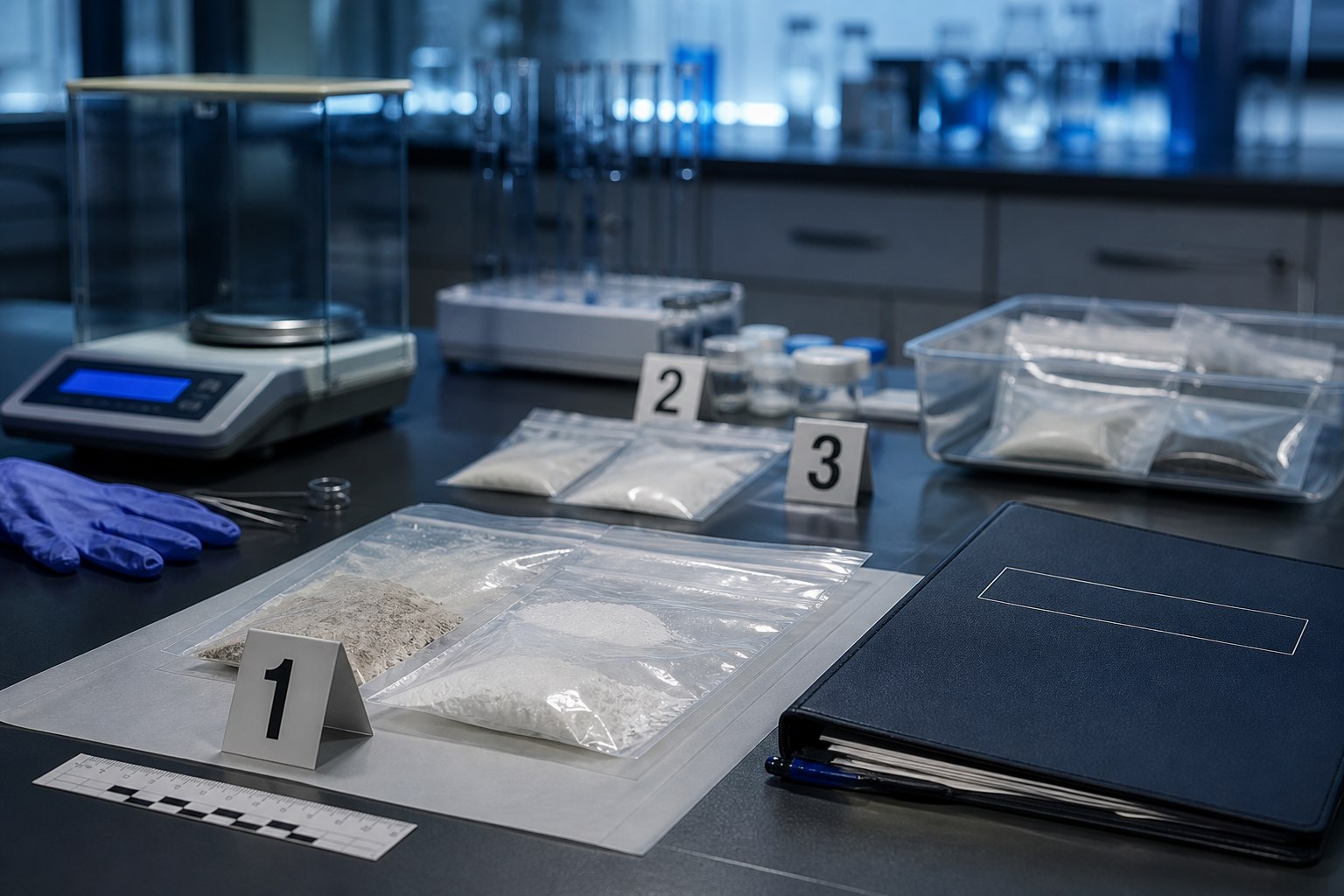
It should be shown that the seized substance reached the laboratory as the same substance. Packaging, seal, weighing, sampling, and delivery records are compared. Preliminary testing does not replace the examination of a certified expert. The active ingredient and net amount of the substance may gain importance for the case file regarding the qualification of the crime and the individualization of the penalty.
Digital Evidence and Communication Records
Phone messages, application chats, and call records are examined along with the method of acquisition. It should be verified who owns the device, who used the account, the entire conversation, and the date information. A screenshot of a single sentence may not show the context of the conversation. Technical records such as imaging and hash values help to assess the integrity of the evidence.
Declaration of Effective Remorse and Cooperation
In drug offenses, the provisions of effective remorse can come up depending on the stage of the incident and the nature of the information provided. Falsely accusing another person is not a method of defense and may give rise to new responsibilities. It should be evaluated whether the statement is concrete, verifiable, and serves the purpose of the law. Before a decision is made on this matter, it is important that the file and possible outcomes are reviewed with the defense attorney.
Treatment and Probation in Possession for Use
In investigations into possession for use, the deferral of the public lawsuit, treatment, or probation obligations may come into question. Notifications must be followed and obligations complied with. In case of a violation allegation, the notification, excuses, and program records should be examined. This mechanism should not be confused with the offense of trafficking.
Arrest Assessment
Although drug trafficking is considered among catalog crimes, arrest is not automatic. Concrete evidence indicating strong suspicion of a crime, reasons for flight or evidence tampering, and proportionality must be justified. Fixed residence, the collection of evidence, and the adequacy of judicial control are evaluated. Detention must be continued with updated justification in each review.
Physical Control and Shared Space Issue
If the item is found in a house, vehicle, or workplace used collectively, automatic responsibility does not arise for everyone present. The location of the item, keys and access possibilities, personal belongings, fingerprints, and statements are evaluated together. The actual control of the driver and passenger, tenant and landlord, or employee and employer must be determined separately.
Undercover Investigator and Technical Surveillance
The assignment of a covert investigator, communication measures, and monitoring with technical devices are subject to legal conditions. The duration of the decision, the person and crime it covers, the reasons for extension, and the analysis of the obtained records are supervised. If there is an allegation that the law enforcement officer guided the person to commit a crime instead of uncovering it, it must be examined in terms of inadmissible evidence and fair trial.
Statement of Witness and Confidential Witness
Whether the witness directly saw the act, whether their knowledge is based on hearsay, and their relationship with the defendant are important. The identity of the confidential witness can be protected; however, the defense's right to test the statement cannot be completely eliminated. If the only decisive evidence is a statement that cannot be questioned, it is investigated whether there are balancing safeguards.
Participation and Personalization of the Crime
Being in a vehicle or communication group alone is not sufficient for joint perpetration. Each person's contribution should be demonstrated in terms of procuring, transporting, storing, connecting with the buyer, and sharing profits. The distinction between assisting and joint control affects the nature of the penalty.
Files Connected Abroad
In incidents at the airport or border crossing, baggage delivery, flight, camera, and customs records become important. Knowledge of the contents of the package, the purpose of the trip, and instructions from third parties are investigated. The foreign national suspect must be provided with a translator; the report signed in a language they do not understand should also be examined in terms of defense.
Post-Judgment Legal Remedies
In appeals to the Court of Appeal and in cassation applications, it should not be said that the sentence is only severe; evidence assessment, reasoning, unlawful search, qualification of the crime, and errors in determining the sentence should be presented under separate headings. The timeline is followed according to the notification of the decision and the nature of the judgment. After the finalization, the conditions for extraordinary remedies are different.
Monitoring Drug Crime Defense in Antalya
As the nature of the file changes, the defense should also be updated. An act seen as use in the investigation may turn into an allegation of trafficking, and a file that started as trafficking may change in nature with laboratory and communication evidence. The defense should recompare each new evidence presented in the indictment and trial with the legal elements without sticking to the initial acceptance.
Taking Statements and Assistance of a Defender
After being taken into custody, the person must be clearly informed of the charges against them, their right to remain silent, their right to notify relatives, and their right to benefit from legal assistance. Signs of fatigue, deprivation, health issues, or the need for an interpreter may affect the reliability of the statement. The use of a statement taken by law enforcement without a defense attorney in the judgment is subject to legal limits. Standard sentences in the statement report should be distinguished from what the person actually said; if there is an allegation of pressure or guidance, health records, camera footage, and official duty records should be requested.
The suspect should know what obligations and rights they have regarding phone passwords, providing samples, or search procedures. It does not consist of destroying defense evidence or making false statements. Immediately after the incident, a statement should be established that can be verified later, preserving information such as location, payment, prescription, treatment, and witness details. The defense attorney follows procedural safeguards not only during the statement but also during detention and prosecution interrogation.
Chronological Resolution of the Investigation File
The time the report was received, the follow-up decision, apprehension, search, weighing, sealing, statement, and delivery to the laboratory procedures should be listed in a single schedule. Any discrepancy in time or location between the records should be explained in terms of the source and reliability of the evidence. The law enforcement footage, radio record, and camera footage, if available, are compared with the written record. The scope of the prosecutor's instruction and whether the procedure exceeded this scope are also evaluated in the defense.
During the trial phase, if the court accepts that the substance was possessed for commercial purposes, it must show from which independent evidence this conclusion is drawn. Abstract intelligence information or a tip from an undisclosed source alone should not serve as a basis for conviction. Collection of evidence in favor of the defendant, the confrontation of witnesses, and submitting expert opinions against device examinations may be requested.
When determining the penalty, the type of substance, the form of the act, the role of participation, and the legal reasons for aggravation and mitigation must be applied in the correct order. The repeated use of the same fact both in the principal penalty and additionally in the aggravation may be subject to objection. The confiscated items and personal belongings to be returned must be clearly distinguished in the judgment.
In these cases, the defense is not limited to claiming that the substance does not belong to the person; procedural, forensic reports, and communication evidence are analyzed together.Attorney Ahmet Emre Çimenconducts evidence-based defense in Antalya and Manavgat during investigation, detention review, prosecution, and appellate stages.
Frequently Asked Questions
Does the quantity of the substance alone prove the crime of trafficking?
No. Although quantity is important, other evidence and the purpose of possession are evaluated together.
Is a phone message alone sufficient for conviction?
The ownership, integrity, context of the message, and its support by other evidence are examined.
Is it mandatory to have a lawyer present during a house search?
Legal procedural safeguards change according to the type of search; the decision and minutes must be checked concretely.
Is a lawsuit immediately filed in possession cases?
The postponement and probation system in the law can be applied according to the conditions of the case.
Is detention mandatory in a drug trafficking case?
No. Specific reasons and proportionality must also be justified for detention.
Can a laboratory report be contested?
Additional examination may be requested against inconsistencies in the sample, seal, method, and results.
Is effective remorse applied to every declaration?
No. The timing and benefit conditions in the law must exist in the concrete case.